I am a final year Phd candidate in Environmental Studies department at CU Boulder. I have a background in economics and mathematics, with graduate training in logic and research methodology, and a decade of applied work on forests, water, cities and disasters. One question connects my training and research: what happens to people when the systems around them are shocked, and how can evidence help them recover? My dissertation brings that question to population change, tracing how climate hazards and population policies shape fertility, migration and mortality across India, Bangladesh and the world. My goal is to keep generating evidence and producing research that is rigorous enough for science and practical enough for the people making decisions on the ground.I am deeply grateful for working on challenges that may have made a difference, somewhere in the world. To have had the opportunity to serve at the World Bank and pursue research I truly believe in is a privilege.
Earlier, I was a Water Data Specialist at the World Bank, where I continue to provide analytical and advisory support as a Data Scientist Consultant. I received an M.Sc. in Logic, Computation and Methodology from Carnegie Mellon University and a B.A. with honors in Economics and Mathematics from the University of Massachusetts Amherst.
with Zia Mehrabi · Abstracts submitted to PAA 2027 and PopClima, Bologna
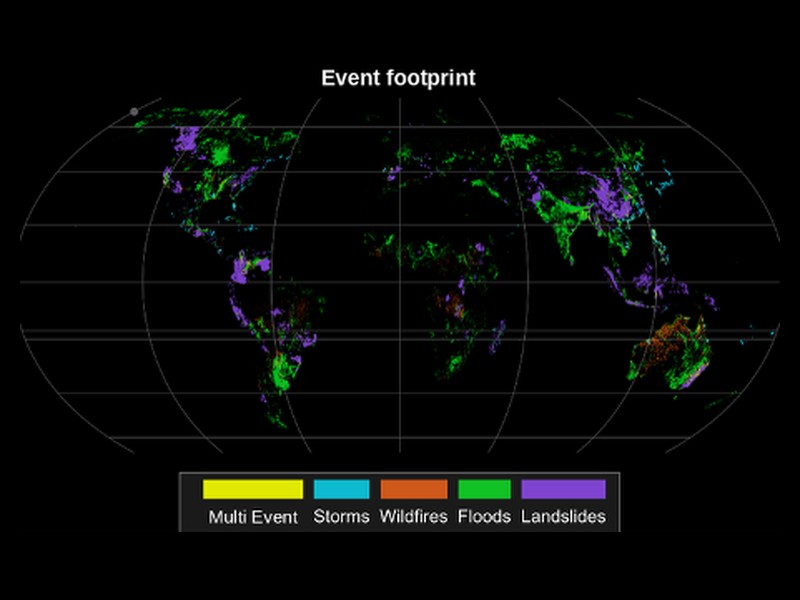
A global map of floods, storms, wildfires and landslides, and the share of exposed people each event displaced or killed.
Abstract
Projections of climate migration rest on thin evidence about how many exposed people actually move. I map the recorded footprint of each displacement event from 2014 to 2023 and estimate the ratio of people displaced to people exposed, separating exposure from displacement itself.
Quantile models of the upper tail give expected displacement and mortality rates for the most severe events by hazard type, a baseline that humanitarian planners and funders can use. I also test whether conflict and subnational human development shift these rates.
Coverage Global, 2014–2023Events 3,512
Preprint forthcoming
Two-child policies in India
Varnitha Kurli · SocArXiv, 2026
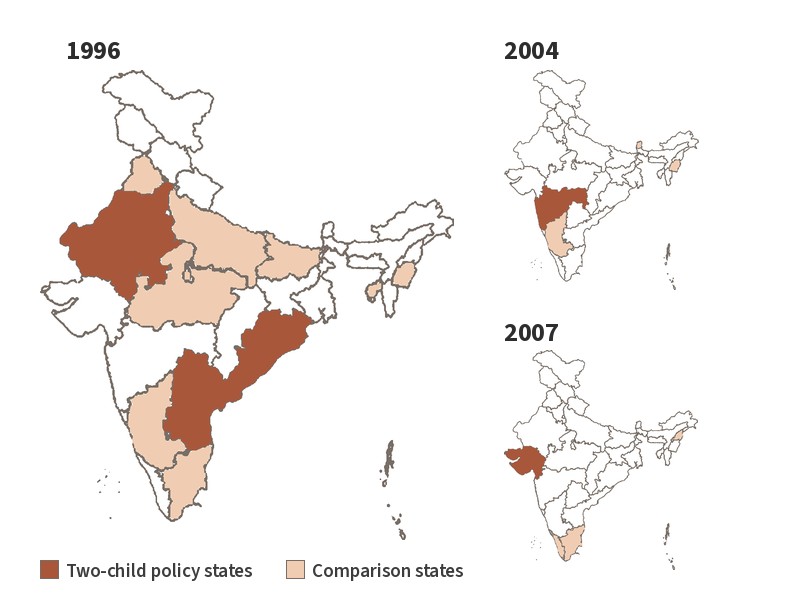
Did laws barring parents of more than two children from local office reduce third births, and did they weigh more heavily on poor families or families without sons?
Abstract
Several Indian states adopted two-child norms that penalized households exceeding a two-child limit. Using matched samples from the National Family Health Survey across three adoption waves, I estimate the effect of these policies on progression from a second to a third birth in the short and longer run.
Triple-difference estimates show no evidence that the policies operated differently by sibling sex composition or household poverty. Son preference and poverty shaped third births independently of the policy, in adopting and comparison states, before and after. The result points to a different kind of policy failure: an instrument with too little force to engage either mechanism.
Data NFHSMethods Difference-in-differences, matching
Work in progress
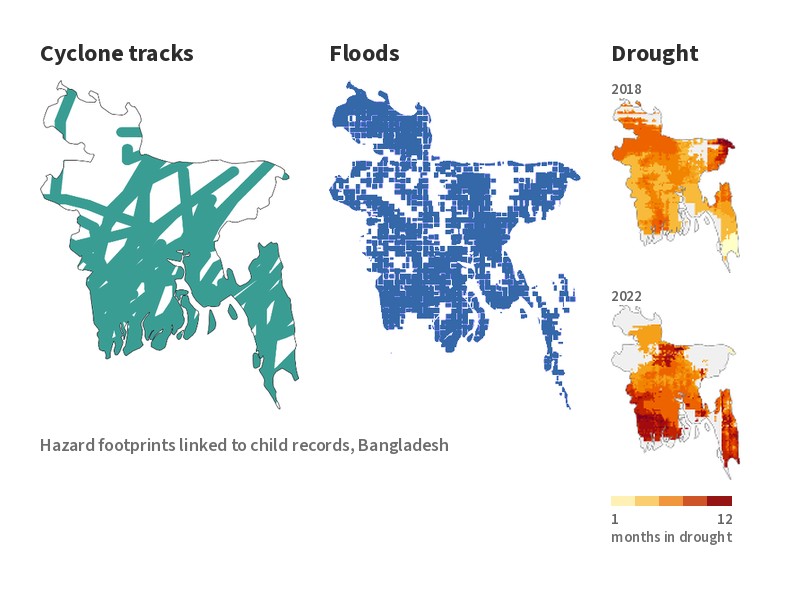
Compounding climate shocks in Bangladesh
with Amanda Carrico · Abstracts submitted to PAA 2027 and PopClima, Bologna
Does a drought early in life followed by a flood or cyclone harm child growth and survival more than either shock alone, and does the order matter?
Abstract
Children in Bangladesh often face a slow-onset shock such as drought or humid heat followed by a sudden one such as a flood or cyclone. The effects of single hazards are well documented, but sequences are not. I test whether compound exposure between late pregnancy and age five is worse than the sum of its parts, and whether drought followed by flood is more harmful than the reverse.
Child records from the 2017–18 and 2022 Bangladesh Demographic and Health Surveys are linked month by month to cyclone tracks, satellite flood maps, drought indices and heat-stress measures. Outcomes are wasting and under-five mortality.
Data BDHS 2017–18, 2022Hazards Drought, flood, cyclone, heat
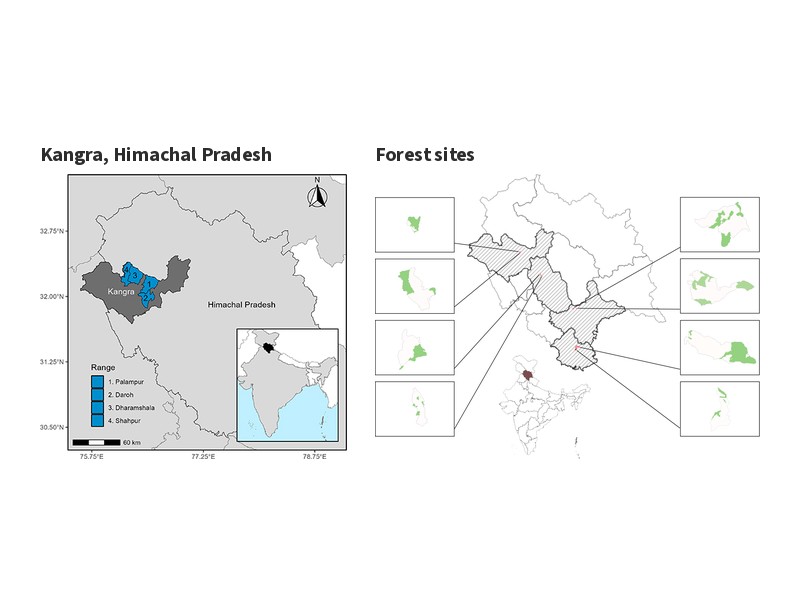
Forests and Sustainable Development
Add a two- or three-sentence summary of this project: the question, where, and what you found or built.
Linkspaper, tool or data link
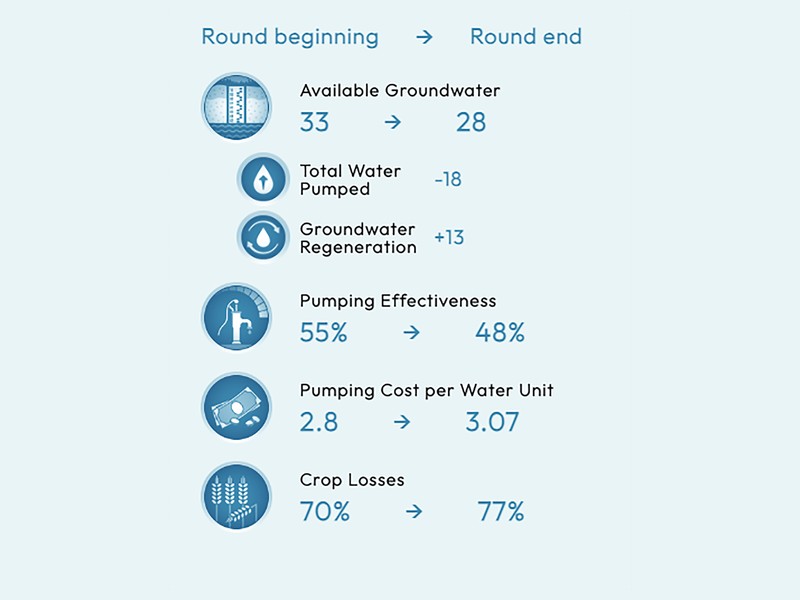
Ground Water Dynamics
Add a two- or three-sentence summary of this project: the question, where, and what you found or built.
Linkspaper, tool or data link
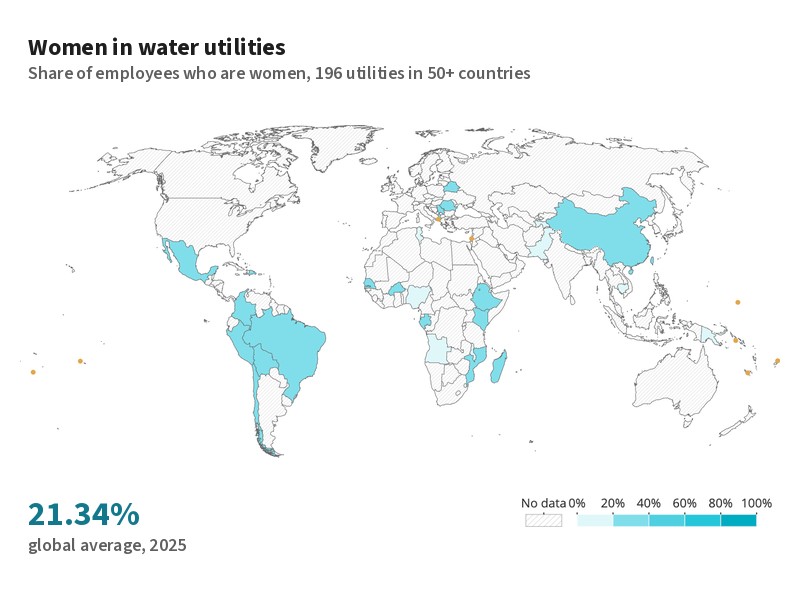
WBG Women in Water
Add a two- or three-sentence summary of this project: the question, where, and what you found or built.
Linkspaper, tool or data link
Climate Hazards
Add a two- or three-sentence summary of this project: the question, where, and what you found or built.
Linkspaper, tool or data link
Urbanization
Add a two- or three-sentence summary of this project: the question, where, and what you found or built.
Linkspaper, tool or data link
Fragile and Conflict-Affected Areas
Add a two- or three-sentence summary of this project: the question, where, and what you found or built.
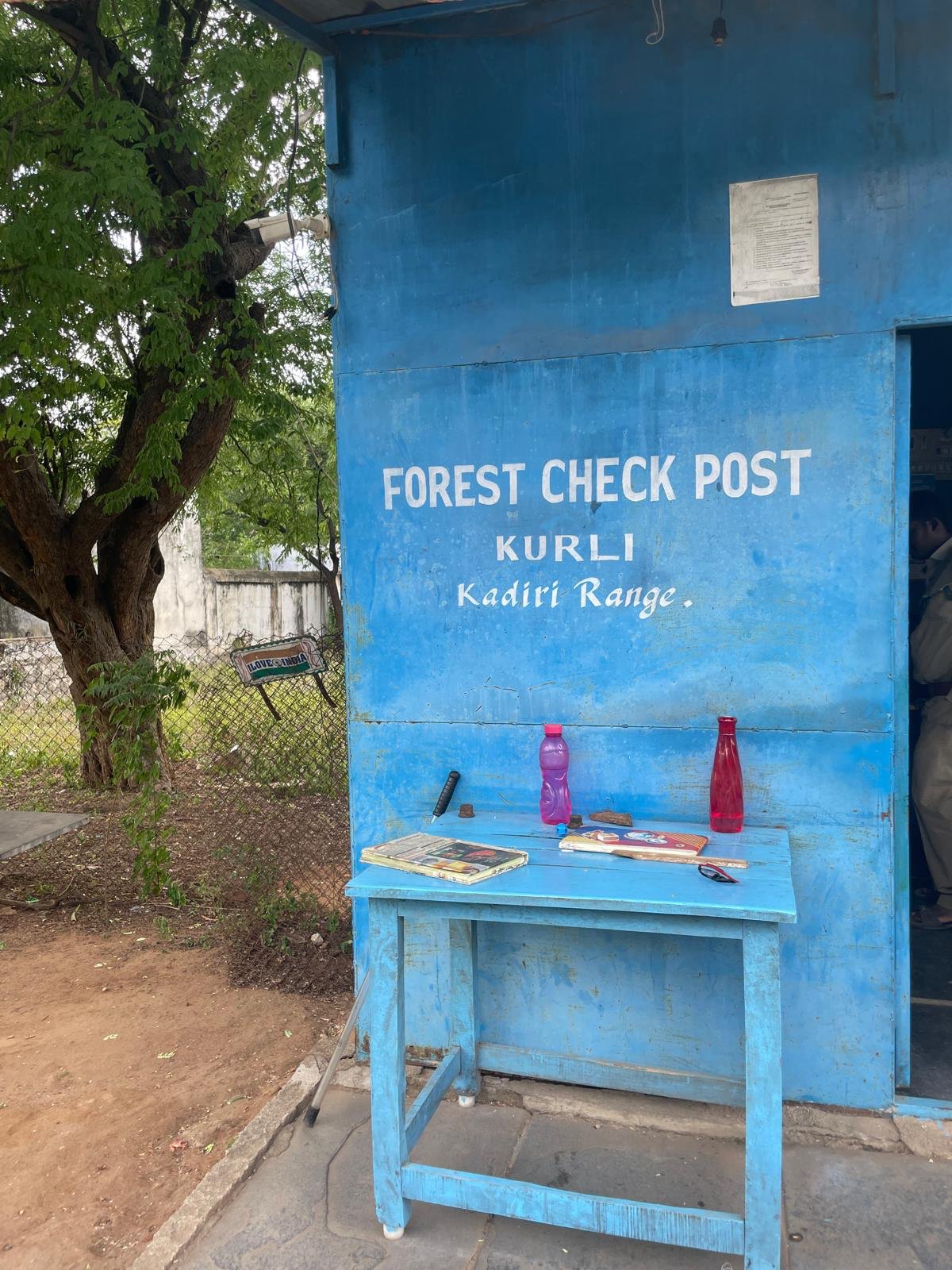
Kurli is my native village, home to roughly 3,600 people in the Kokkarajukonda Forest Reserve. I try to visit as often as I can. I took these photographs in 2021, and the people in them are from the village, people I have known all my life.
The forest check post at Kurli, Kadiri RangePicking chrysanthemumsRolling a tyre on the village roadWalking the fields
Paintings
Alongside research, I paint, mostly in acrylic and watercolor. I am also trained in oil painting, though I tend to lose patience with elaborate oil pieces. Much of my work belongs to a series on migration, urban life and climate change, based on oral histories from people in my native villages of Kurli and Tarimella in Anantapur, India. The paintings return to the questions in my research, such as drought, leaving home, and how girls’ lives differ across schools in Old Hyderabad, but through color, texture and, at times, Telugu script.
The last farewell is not easy · Acrylic, 2016Muslim Problem · 2016Missing EyeGirls in Government and Private Schools in Old Hyderabad · Acrylic on paper, 2020The many layers of droughtThe Drought · 2020